Animal-assisted therapy
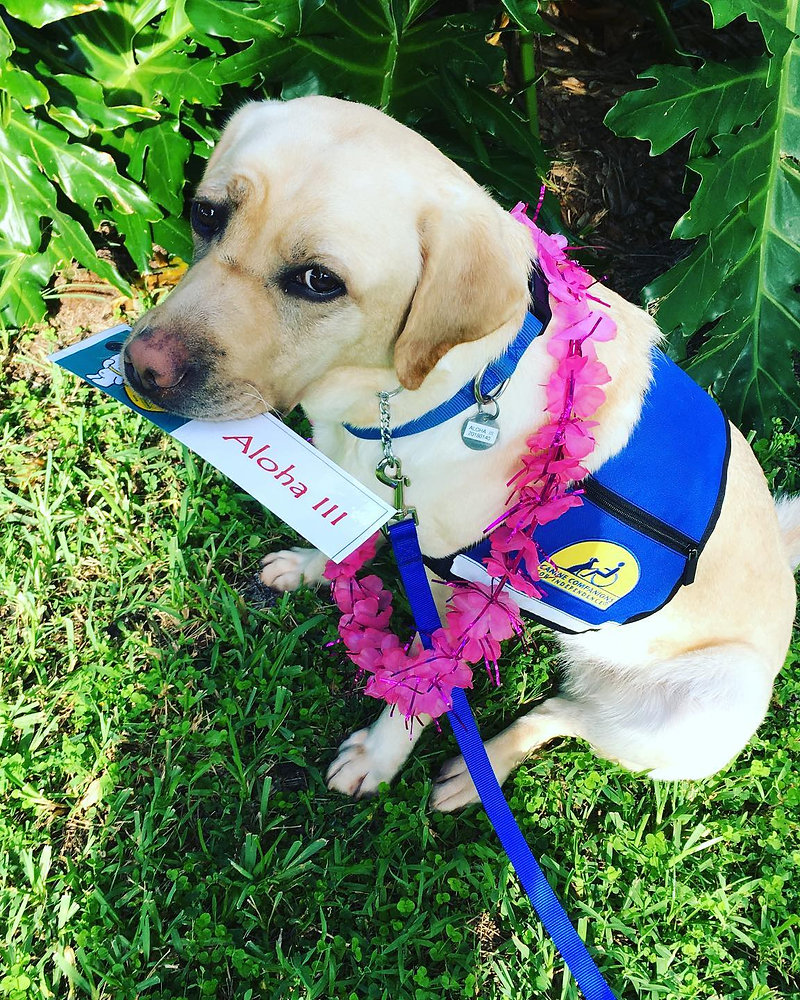
Aloha Facility Dog
A Certified Canine Companion Facility dog that can be part of treatment at times to encourage kids to try their best!
Lauren and Alex both have a passion for using AAT as an intervention approach in therapy. They presented a research poster on the effectiveness of AAT at the Florida Occupational Therapy Association (FOTA) in 2008.
AAT is a type of therapy intervention that uses a certified/specially trained animal in a client’s goal-directed treatment program.
Currently, 7 Senses Therapy utilizes “Aloha” a Yellow Lab from Canine Companions For Independence. AAT is designed to help improve the physical, educational, social, emotional, and/or cognitive functioning of clients. AAT can also be used to motivate a client to attempt a new or challenging task.
To learn more about obtaining a dog, like Aloha, free of charge from Canine Companions for Independence please go to www.cci.org.
Videos
All videos on YouTube


How Aloha helps in a session
- Take Aloha through an obstacle course for sequencing and gross motor skills
- Work Aloha’s fasteners, leash, and collar for fine motor skills
- Practice dressing by buttoning and zipping Aloha’s vest
- Cut treats for scissor skills
- Brush and pet Aloha for range of motion and tactile input
- Give commands for sequencing and language
- Toss toys for arm motion and eye-hand coordination
- Play tug-of-war for arm strength and proprioceptive input
- Carry water and food for bilateral coordination
- Read to Aloha to build confidence with reading
- Touch ear, paws, and tail for body-part recognition
- Use Aloha as support when a task is new or hard
- Walk Aloha to practice transitions
- Take turns in a game
- Practice manners and opening up with another being
- Watch Aloha demonstrate a tunnel or course, then try it
- Paw painting for children who need tactile input
- Write letters to Aloha for legibility, formation, and spacing
- Watch Aloha model when to be excited and when to be calm
- Toss a balloon back and forth for bilateral coordination
- Use gestures and signals to communicate, for fine motor practice